Developing trust with local herders is the key to building and expanding a business in Kyrgyzstan.
As the director of June Cashmere, a responsibly sourced textile business in Kyrgyzstan, Sy Belohlavek (WC ’98) is used to supplying the materials for other companies’ products. Now, the entrepreneur is hoping a Kickstarter campaign will help his company produce its own materials.
If the company hits its goal of $35,000, June Cashmere can begin producing cashmere sweaters, hats, scarves, and camel hair blankets. If it meets its stretch goal of $50,000, it can extend that list of products the following fall.
“The Kickstarter campaign is basically a medium for us to dip our toes in the water in that direction,” Belohlavek said. “We want to keep some of the dehaired cashmere we produce so we can make products to sell ourselves.”
Cashmere is a fiber gleaned from cashmere goats that is softer, finer, and more expensive than sheep’s wool. It is often called “soft gold” because of its difficulty to produce. During winter months, the goats grow a fine, downy winter undercoat that herders must harvest to produce cashmere. On average, a goat produces four ounces of cashmere, meaning it takes over four goats to produce enough cashmere to assemble a single sweater. By contrast, the wool of a single sheep can produce four to five sweaters.
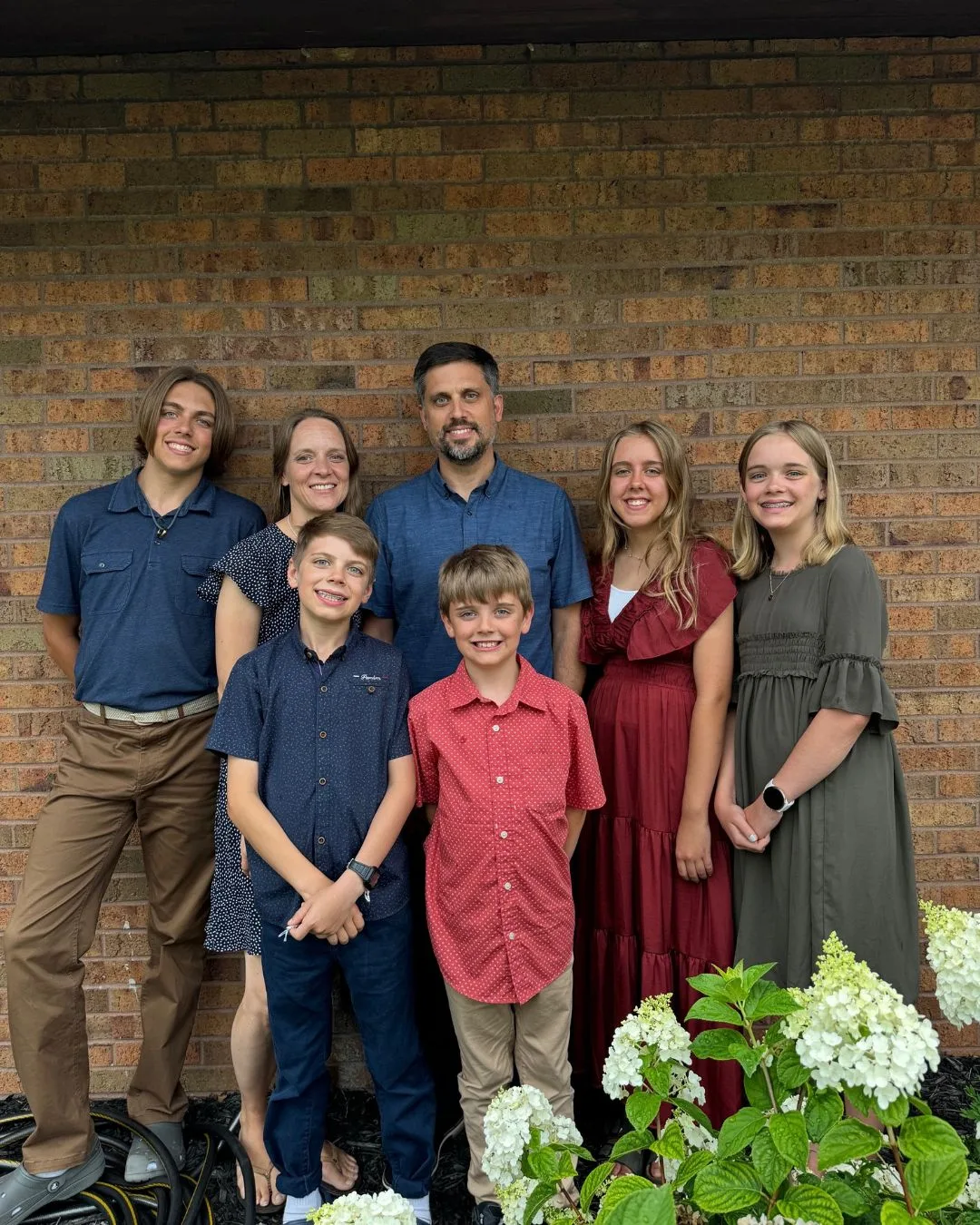
In 2010, Belohlavek, his wife Renessa, and their five children, Winslow, Alethia, Maisie, Finnley, and Quincy, moved to Kyrgyzstan, a country of 6.5 million people nestled in the Tian Shan and Pamir mountain ranges of Central Asia, with a simple mission: to provide goat shepherds with a fair price for their cashmere fibers.
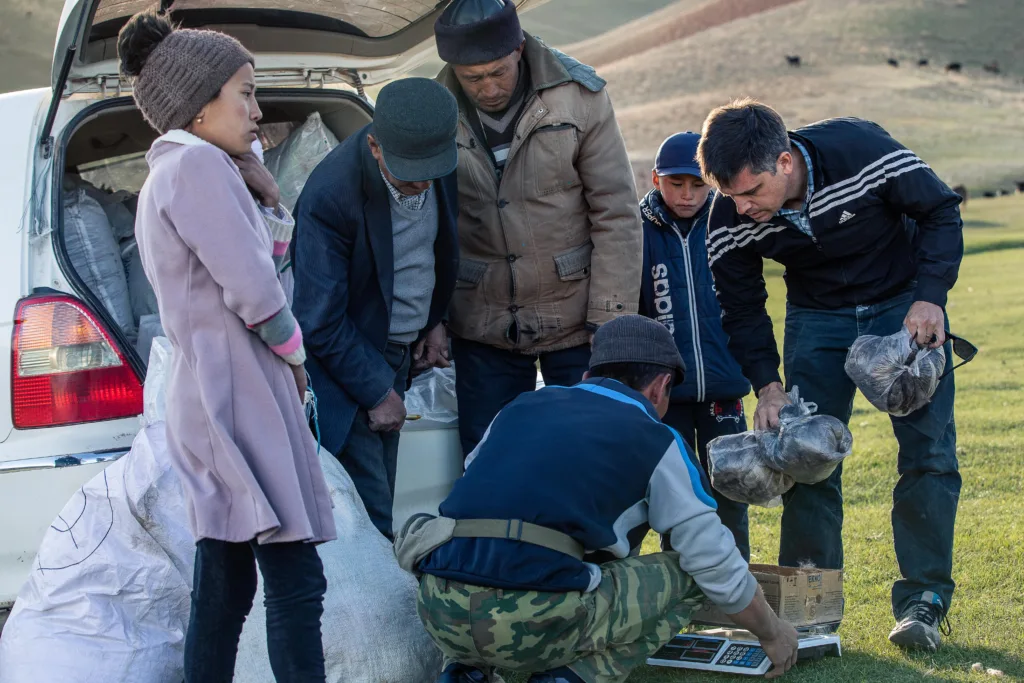
June Cashmere deals directly with Kyrgyz shepherds, teaching them the most efficient way to harvest the cashmere from their goats to maximize this source of income.
Belohlavek admits he knew “absolutely zero” about these techniques when he first started. The original idea of working with these natural fibers started with his association with J.C. Christensen, the owner of Morning Star Fiber then located in Wooster, Ohio. Christensen contacted Belohlavek, a 2002 graduate of Grace College with degrees in business administration and intercultural studies, about his vision to build a mill in Kyrgyzstan like his one in Ohio.
In 2001, Belohlavek spent two weeks in Kyrgyzstan to meet a cross-cultural experience requirement in college, and then returned to the country for a year in 2002.
“(Christensen) originally intended to move over to Kyrgyzstan with some of his equipment,” Belohlavek said. “After we moved over there, we were learning the language and doing research, anticipating we’d help him get started.”
However, the Christensens were unable to move to Kyrgyzstan, but the Belohlaveks decided to use the information they had already gleaned to start their own business, June Cashmere.
“And it’s been progressively growing since then,” he said. “We knew the cashmere business was rooted in tradition, but it had fallen upon hard times (after the collapse of the Soviet Union). We had a chance to come in and try to help catalyze its renewal.”
When June Cashmere started processing cashmere, the fiber traveled a nearly 6,000-mile journey. It was harvested in Kyrgyzstan and shipped to Europe, where mills cleaned and turned the fiber into yarn. Finally, the yarn was sent to Maine, where it was dyed and then sold to retailers.
In 2017, June Cashmere began a seven-year process of creating its processing plant in Kyrgyzstan. In January 2023, the company opened Kyrgyz Cashmere, a facility that uses machinery to separate the animals’ coarse guard hair from the fine, downy undercoat used for its products.
The fiber is now washed and dehaired in Kyrgyzstan before being sent to England, where it is spun and dyed. After the yarn is completed, it is sent to Columbus for distribution.
Like the mountains surrounding it, Kyrgyzstan’s business environment is difficult to navigate. It is a landlocked country in a distant part of the world, making it expensive to transport materials and products. Belohlavek added that there are often infrastructural challenges and fluctuating currency rates.
“There are macroeconomic issues that significantly affect our market,” he said. “The higher we go in the value chain, the more opportunity we have, but it also increases the vulnerability and the likelihood of glitches and problems.
“If something were easy or obvious to figure out, it’d be already done. We’re (creating) something that wasn’t there before. In one sense, that’s a great opportunity, but there’s also a host of challenges and uphill climbs to make things work.”
Building relationships with Kyrgyz shepherds was one of the biggest challenges in the process. To do that, Belohlavek had to step into their world.
“You can’t learn to swim through a correspondence course,” he laughed. “You must jump in the water and apply what you’ve heard and the information you have learned.
“It’s easy to dwell in the margins, on the edges of the community. It’s much more difficult as an outsider to come in and step into the reality of a place. These fibers are not just a commodity in that place but integrally, emotively, and meaningfully woven into its heritage and history.”
One of the differences in setting up business deals comes down to paper vs. bread.
“As Westerners, we think in terms of contracts and paperwork,” Belohlavek said. “You must get everything down in writing. However, contracts don’t have the same guarantee or sticking power in Kyrgyzstan as in our world.
“I remember one of our key staff had a meal with his whole family at this guy’s house. On the surface, that looked like it was just a meal, but the whole thing was like cementing this guy’s honor. In that culture, breaking bread is a sacred thing. Everyone knows they made this covenant together.”
Sign up for their newsletter for more information about how you can support Sy and his work. You can also follow them on Instagram and Facebook.