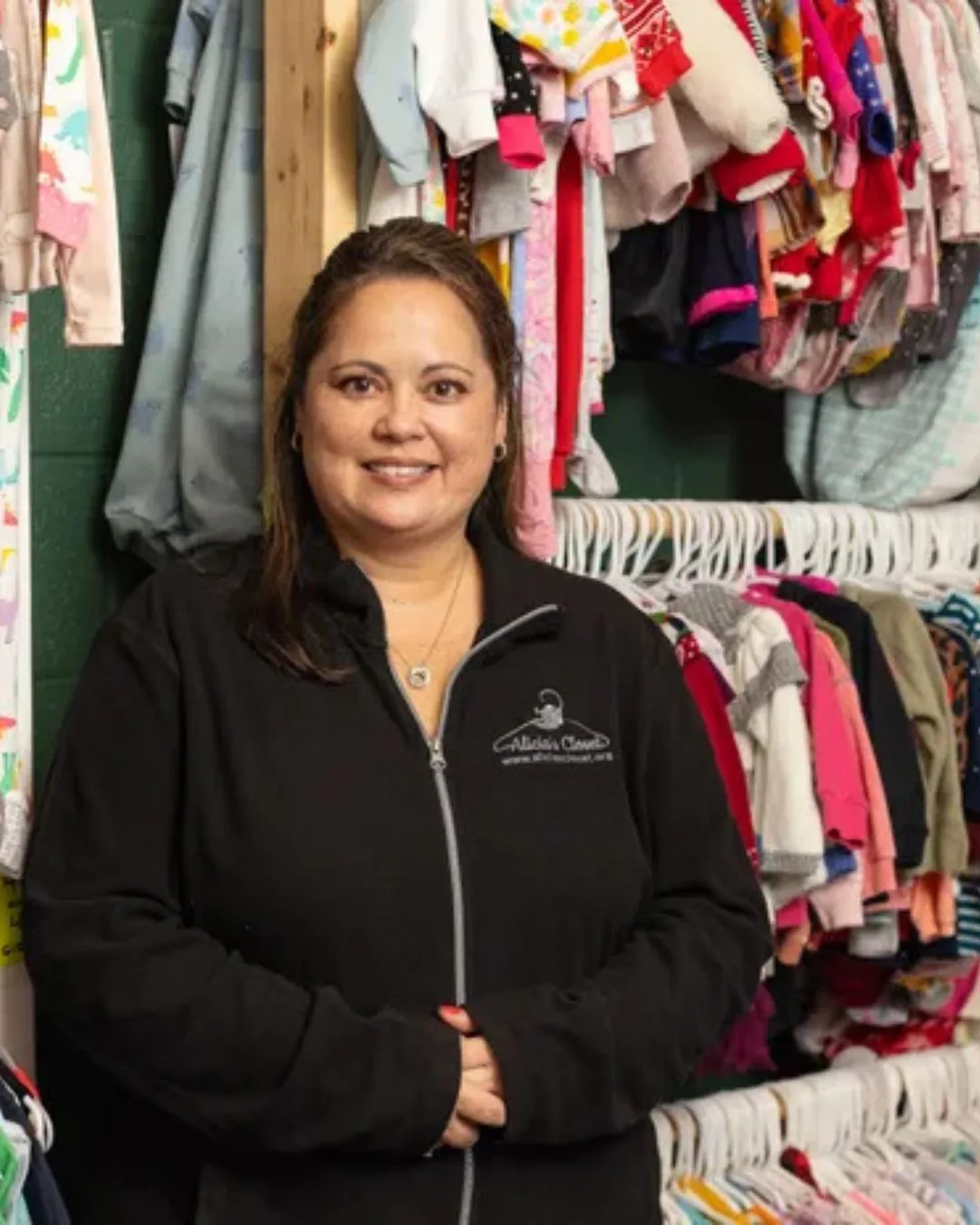
Alicia’s Closet is out to meet the needs of the foster care community.
When Maya (Ayers) Ward (WC ‘98) and her husband Eric began accepting foster children into their home, the two ran into one immediate problem: closet space. Their extended families, church family, and friends offered so much support that bags of clothing, toys, and essentials quickly overran their home.
“We realized there’s no way we can use all of this stuff,” said Ward, who has adopted four foster children—Alicia (16), E.J. (15), Charlie (5), and Mali (5) – with her husband. “We should share it with others.”
The two converted their living room into Alicia’s Closet, a free store teeming with plastic bins of items and a clothing rack for other foster families.
The 501(c)(3) tax-exempt nonprofit organization has expanded way beyond the Wards’ living room in the last eight years. Now, they have two storefronts, one in Dublin and one in Fremont, to help meet the needs of foster families. The Wards estimated Alicia’s Closet served between 2,500 and 3,000 foster care families in 2024.
“(When we first started) I was teaching full time, and I thought it would be a little side gig to help out our foster parent friends,” Ward said with a chuckle. “But obviously God had other plans.
“Honestly, we didn’t expect it to grow the way it did. It was a huge relief and blessing to help others as well as to be able to move all of the stuff out of the house.”
Alicia’s Closet is primarily run on donations. Each month, it posts on its social media pages what items the free stores have and what they are currently in need of. Families can make appointments to visit the store or submit requests for items.
During the holidays, the group also distributes gifts to children who might not receive a present otherwise.
Just the Clothes on Their Backs
For the children, being placed with a new family often means leaving behind much of what they have grown accustomed to. Often, children arrive with just the clothes on their backs.
“There’s not a lot of planning when someone goes into foster care,” Ward said. “The kids aren’t able to go through their home and get their favorite teddy bear, blanket, or any of their belongings. The stuff they do have often includes some items in a trash bag that a worker or a police officer grabbed when they went around their home.”
Ward hopes the items in Alicia’s Closet can not only replace the items they left behind but also restore their feeling of dignity.
“Many times, a family comes into the store with their heads down,” she said. “They leave with a sense of pride because the items they received are new and the cool brands they like. They feel a little bit of dignity just from those seemingly small things.”
Alicia’s Closet has gone beyond supplying clothing and other essential items. It helps 18-year-olds who have “aged out” of foster care. According to Ward, it can be a difficult transition period for those who have not been adopted or reunited with their families.
To help with that change, Alicia’s Closet extends its services for an additional 10 years after one leaves foster care.
Parental Relief
Another group that needs support is foster parents. The outreach is a counseling resource for those in the foster community, as well as providing support and relief to those who have taken in foster children.
“Alicia’s Closet grew organically into different things,” she said. “When people would come to our home to gather things, they’d say, ‘You’re the first foster parent I’ve met. I’m feeling a little overwhelmed right now.’
“(Alicia’s Closet) has gone from a place where people could pick up essentials to an area where foster parents could sit down and talk with other foster parents while their kids played with each other.”
Every Person Has a Story
When they first got married, Eric and Maya Ward wanted to become parents, but she said, “how that happened wasn’t so important to us.”
Once the two became foster parents, the Wards realized the issues that exist in the foster care world. One of the needs of those within the foster care system is a sense of empathy from those outside it.
“Every person has a story,” she said. “For those looking from the outside, it’s very easy to think ‘Oh, that person is making poor choices and it’s their fault their children are in the foster care system.’
“After working with some of the biological parents, I realized if you removed my support systems, I could be in the same situation as some of these families.”
Building Empathy
Ward’s empathy for those in foster care stems from her father, the late Richard “Gene” Ayers, a social worker who worked with at-risk youth.
“From a young age, I was very aware of the need that exists within the foster care community,” Ward said. “That planted the seed. I knew I would be involved in the foster care world in some way as an adult.”
Ward became emotional when discussing how Worthington Christian prepared her for her ministry. The idea of “meeting people where they are and showing them that they are loved” is one of the cornerstones of Alicia’s Closet.
“We want people to know they are loved and they’re worthy of being treated with dignity,” she said. “You show people God’s love through the way you love others.”
No Longer Alone
One of the clients who remained with Ward was a grandmother on a fixed income. Without warning, she had to care for six grandchildren, and she didn’t know how she would provide for them.
Gradually, she began attending Alicia’s Closet support group meetings and receiving items from the store.
“She said to me, ‘I walked into this place feeling like I was alone. It’s not going to be easy, but I now know I’m not alone,’” Ward said.