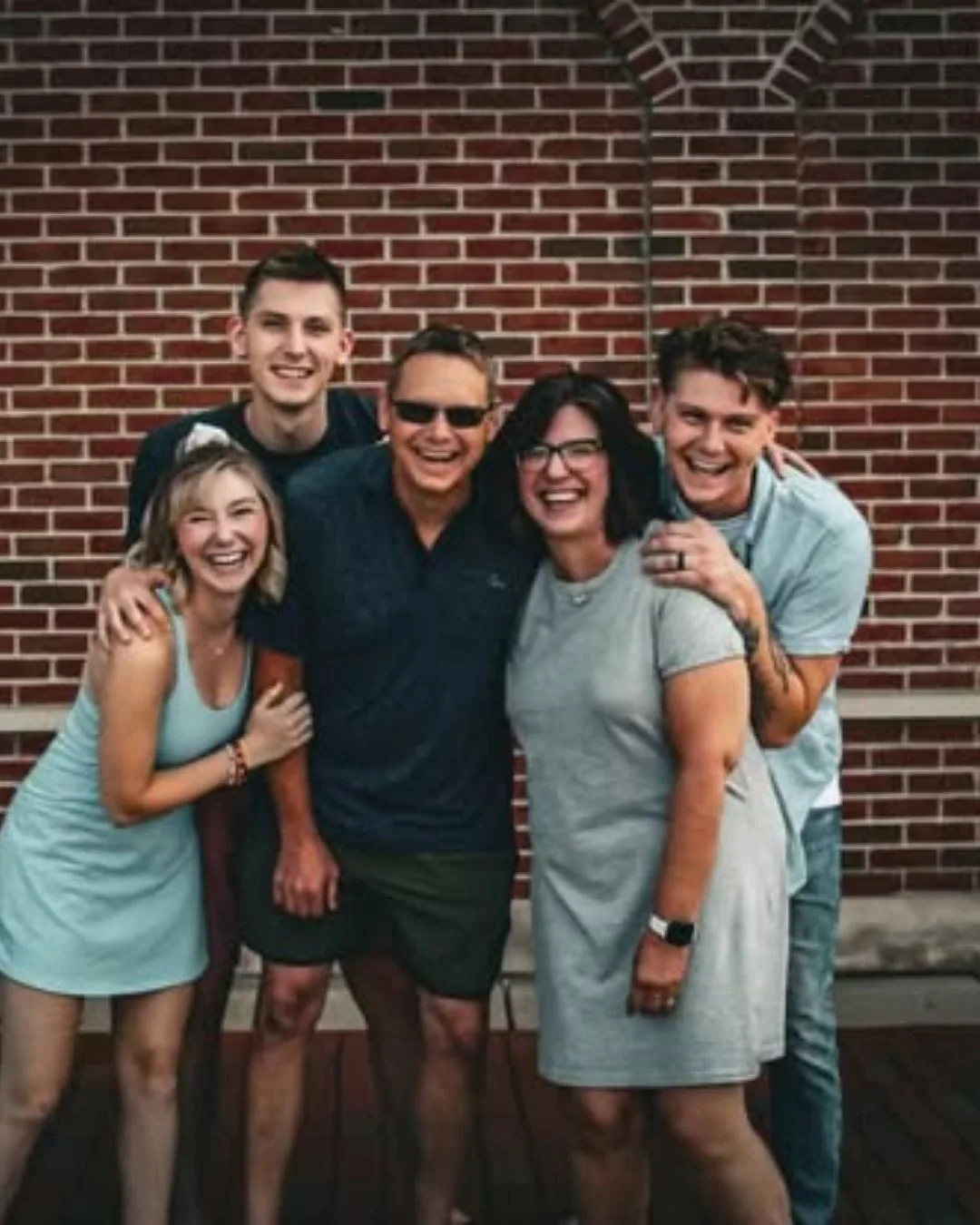
For Veach, helping others heal also helps him avoid burnout.
According to Paul Veach (WC ’87), everyone could use a therapist at some point, including those whose business is helping others.
“All therapists, teachers, emergency service personnel, first responders, even our pastors are at risk of developing compassion fatigue,” said Veach, a mental health counselor in North Carolina. “They become so focused on other people’s problems that their whole world revolves around handling those troubles.”
“You need to set boundaries on your time and energy and keep God at the center of what you do. We need to learn how to leave our work at the office and not bring it home with us.”
Veach knows that feeling all too well. At times in his career, Veach said he became so overwhelmed by helping others that he doubted his effectiveness. During those times, he has read and reread Philippians 1:6-10. In that chapter, Veach says Paul expressed his love for the people he had served with in Philippi and the joy he found in serving the Lord alongside them.
“That passage fits very well with my experience of working through those doubts and seeing that the Lord is faithful, and for understanding what it takes for me to continue on that path,” he said. “At different points in my career, I’ve wondered whether I should do something else. When you’re going through those struggles, you don’t always have a workable understanding of what is happening.”
Veach serves as a mental health counselor for a school system in North Carolina and has a part-time private practice focused on marital issues, addiction and trauma recovery. One of the most fulfilling parts of his work has been serving as a volunteer leader for REBOOT Recovery classes through his church in Statesville, N.C.
“That has actually helped prevent burnout and compassion fatigue for me,” he said.
Founded by Jenny and Evan Owens, REBOOT is a peer-led, faith-based, and outcomes-driven program geared toward helping veterans, first responders, and others who are experiencing the effects of post-traumatic stress. Currently, the program is run in 48 states and 11 countries.
According to Veach, people who have experienced trauma often go through spiritual crises as well as emotional and physical trauma. When an Army chaplain approached Veach 10 years ago about working with him in the REBOOT program, he was interested in the program’s non-clinical, scripture-based format.
The road to recovery, whether it is from compassion fatigue or some form of post-traumatic stress, takes many different paths.
Faith has been the keystone for Veach. As a Worthington Christian “lifer” (a person who attended the school from kindergarten through senior year), Veach believes WCS gave him a strong biblical foundation.
However, he admits it took a while for those lessons to sink in.
“I was a late bloomer,” he said with a laugh. “I didn’t apply all the things I learned until I was midway through college. When the Lord brought my wife Ann into the picture, I came to the realization I needed to get myself together.”
One of the facets that drew Veach to REBOOT is its incorporation of Christian teachings into the program.
“I was learning a lot of effective treatments for post-traumatic stress,” he said. “However, there is also a spiritual component that sometimes gets overlooked. Some feel their faith and even their identity have been shattered. Jenny and Evan developed a curriculum to address spiritual and moral injuries.
“(Therapists) have to remember it’s through God, and not our own efforts, that people change. That kind of renewed my vow and my vision of what the Lord was leading me to do.”
Additionally, fellowship plays a central role in the program. Members of REBOOT meet once a week for 12 weeks in the initial phase, and a high percentage of program graduates continue their involvement with REBOOT after graduation.
“Often there’s a reluctance or a stigma to share problems,” Veach said. “People become flooded with emotion and re-experience their trauma, so they don’t share it with others.
“We are social creatures who are designed to depend on each other, but that requires trust and safety. It’s a healing process not to be isolated or under the weight of shame. When they feel camaraderie with other participants, they open up and face their trauma more easily.”
However, getting past the issues requires developing coping skills outside the weekly meetings. Veach said finding ways to express one’s feelings is “a key to the healing process.”
“Unexpressed emotions get expressed in other ways,” he said. “If it doesn’t come out of our mouths, get written down, or become expressed in some way, it comes out through our bodies in the form of physical and mental illnesses.”
Veach’s outlets involve physical release. He’s an avid camper, hiker, and motorcyclist. He also participates in F3 (Fitness, Fellowship, Faith), which is offered daily at hundreds of locations across the United States.
“We just get out there around 5:30 a.m. and do a boot camp with sandbags, kettlebells, and cinderblocks,” he said. “It has become a big outlet for me.”
By focusing on the areas of fitness, fellowship, faith, and other free-time outlets, Veach has seen the impact the program’s principles can have on others’ lives while also helping him battle compassion fatigue in his work.
One of the most rewarding experiences came when he was working with a student after she lost her father during her sophomore year.
“She came away from the grief group saying, ‘Mr. Veach, I want to do what you do,” he said. “She went on to get a master’s degree in social work, and now she’s leading grief groups for the same organization I partner with. It was a real moment for me to see one of my students become one of my colleagues.”